A Timeline of Resilience: How the Basilica Cistern Survived Earthquakes and Empires
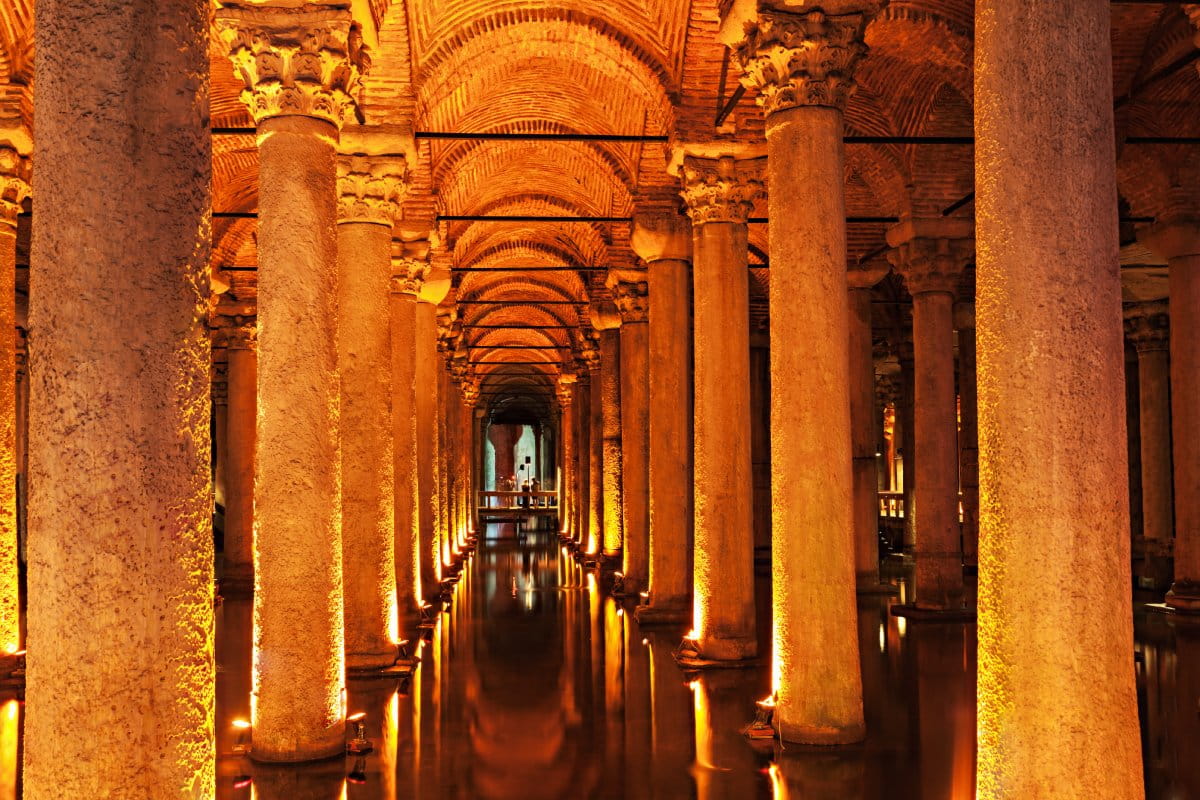
When you descend the stone stairs into the cool, dimly lit expanse of the Basilica Cistern, the first thing that strikes you is the silence. It is a heavy, watery silence, broken only by the soft drip of condensation and the whispers of awestruck visitors. But if these 336 marble columns could speak, they wouldn't just whisper; they would tell a thunderous tale of survival. Standing beneath the bustling streets of Istanbul for over 1,500 years, this subterranean giant has weathered not just the shifting tides of empires, but the violent shaking of the earth itself. It is a miracle of engineering that it still stands today, but it wasn't just luck that preserved it. It was a continuous, centuries-long effort of reinforcement and repair.
The story of the Basilica Cistern, or Yerebatan Sarnıcı as it is locally known, is often told through myths of Medusa and tears of enslaved laborers. However, the true narrative is written in the layers of mortar, the iron clamps, and the structural interventions that have held the roof up against gravity and seismic waves. From the Byzantine architects who laid the first brick to the Ottoman sultans who ordered urgent repairs, and finally the modern engineers who retrofitted the structure for the 21st century, this is the timeline of how the Sunken Palace refused to fall.
The Byzantine Foundation: Built with Foresight
To understand how the cistern survived, we must first look at how it was built in 532 AD. Emperor Justinian I didn't just want a water storage facility; he needed a structure that could withstand the immense pressure of the city above and the water within. The architectural genius lies in the vaulted ceiling and the specific distribution of weight. The 336 columns, mostly recycled from ruined temples across the Roman Empire, act as a forest of support, distributing the load of the brick arches evenly. This redundancy is key; if one column were to fail, the surrounding arches are designed to transfer the load, preventing a catastrophic domino effect.
However, the true hero of the cistern's longevity is the waterproofing material known as 'Khorasan mortar.' This special mixture, composed of crushed tile, brick, egg whites, and lime, is incredibly durable and flexible. Unlike modern concrete, which can be brittle, Khorasan mortar has a degree of elasticity. This allowed the thick walls of the cistern to move slightly during the frequent earthquakes that plague the region without cracking and losing the precious water supply. It was a masterclass in hydraulic engineering that set the stage for survival.
Ottoman Interventions: Saving the Forgotten Palace
After the conquest of Constantinople in 1453, the cistern fell into a period of obscurity, famously 'rediscovered' by Petrus Gyllius when he noticed locals fishing through holes in their floorboards. Once the Ottomans recognized the value and the danger of this massive underground void, they began a series of critical interventions. The Ottomans were master builders, and their contribution to the cistern's survival is often understated. They didn't just use it; they reinforced it.
Two major restoration periods during the Ottoman era stand out as pivotal moments that likely prevented a collapse. The first occurred in the early 18th century under Sultan Ahmed III. Architect Kayserili Mehmet Ağa was tasked with repairing the crumbling masonry and reinforcing columns that showed signs of stress. Later, in the 19th century, Sultan Abdulhamid II commissioned another extensive repair project. These interventions were not merely cosmetic; they involved significant masonry work to stabilize the arches that had been weakened by time and tremors.
Timeline of Critical Interventions
The survival of the cistern is a result of timely human intervention. Here is a breakdown of the major structural events that defined its history:
| Era | Period / Date | Key Intervention & Significance |
|---|---|---|
| Byzantine | 532 AD | Construction using Khorasan waterproof mortar and cross-vaulted arches for load distribution. |
| Ottoman | 1723 (Ahmed III) | First major recorded repair by Architect Kayserili Mehmet Ağa; stabilization of crumbling arches. |
| Ottoman | 19th Century (Abdulhamid II) | Extensive masonry repairs and reinforcement of columns to prevent structural fatigue. |
| Republican | 1985-1987 | Removal of 50,000 tons of mud; construction of the first concrete walkway for visitors. |
| Modern | 2020-2022 | Installation of steel tension bars and earthquake retrofitting; removal of heavy concrete walkways. |
The Republican Era: Cleaning and Reinforcing
By the time the Turkish Republic was established, the cistern was once again in a fragile state. The most dramatic transformation occurred between 1985 and 1987. Before this period, visitors had to navigate the waters in small boats, and the bottom was filled with meters of silt and mud. The Istanbul Municipality undertook a massive cleaning operation, removing 50,000 tons of mud. This was crucial not just for tourism, but for the structure itself—the mud was exerting uneven pressure on the column bases and hiding potential cracks.
During this cleanup, the famous Medusa heads were revealed, having been buried for centuries. However, the 1987 restoration also added heavy concrete walkways. While these allowed visitors to walk through, we now know that adding heavy, rigid concrete to a flexible historic structure isn't ideal. This realization led to the most recent and perhaps most important engineering feat in the cistern's history.
The 2020-2022 Restoration: Earthquake Proofing for the Future
Living in Istanbul means living with the reality of earthquakes. The restoration completed in 2022 was driven by a singular goal: seismic resilience. Engineers realized that the heavy concrete walkways added in the 80s were a liability. They removed them entirely and replaced them with a lightweight, modular metal walkway that sits above the water and does not touch the ancient columns. This reduces the load on the structure significantly.
More importantly, invisible to the untrained eye, steel tension bars were installed between the columns' capitals. These bars act like a corset, holding the columns together. In the event of a major earthquake, these tension bars prevent the columns from swaying too far apart, which would cause the roof to collapse. This modern intervention respects the original architecture—it is reversible and minimally invasive—while providing the strength needed to survive the 'Big One' that seismologists predict.
Why the Structure is So Resilient
It is fascinating to analyze why this specific building has outlasted so many others in the Sultanahmet area. The resilience comes down to a combination of ancient wisdom and modern care:
- Redundancy: With 336 columns, the failure of a single support does not spell doom for the entire structure.
- Flexibility: The brick arches and Khorasan mortar allow for micro-movements, absorbing seismic energy rather than snapping.
- Constant Monitoring: Today, the cistern is equipped with sensors that monitor humidity, temperature, and structural shifts in real-time.
- Water Support: Interestingly, for centuries, the water itself provided a stabilizing pressure against the walls, though today water levels are kept lower for maintenance and visitation.
Walking Through History Today
When you visit the Basilica Cistern today, you are not just looking at a tourist attraction; you are standing inside a survivor. The eerie glow of the new lighting system highlights the cracks and repairs on the columns, wearing them like battle scars. Every clamp and every layer of mortar represents a generation that refused to let this beauty fade into the darkness.
Visiting the Basilica Cistern Today: Today, visitors can experience the cistern in all its glory. The new lighting enhances the mystical atmosphere, and the walkways provide stunning views of the Medusa heads and the carp swimming below. The cistern is open to the public daily, with tickets available online or at the entrance. It's recommended to check the official website for the latest opening hours and any special events. Be prepared for a short wait, especially during peak season, as entry is controlled to preserve the environment within. The temperature inside remains cool year-round, so a light jacket might be useful. The experience is profound because it connects you to the fears and hopes of the people who lived here before us.
They faced the same earthquakes and the same uncertainties, yet they managed to preserve this masterpiece. As you walk along the metal grates, hovering above the carp-filled waters, take a moment to appreciate the invisible timeline of resilience that surrounds you. It is a testament to the fact that with enough care and engineering, beauty can indeed withstand the test of time.