Beneath the Surface: The Cistern\'s Role in Istanbul\'s Water Management
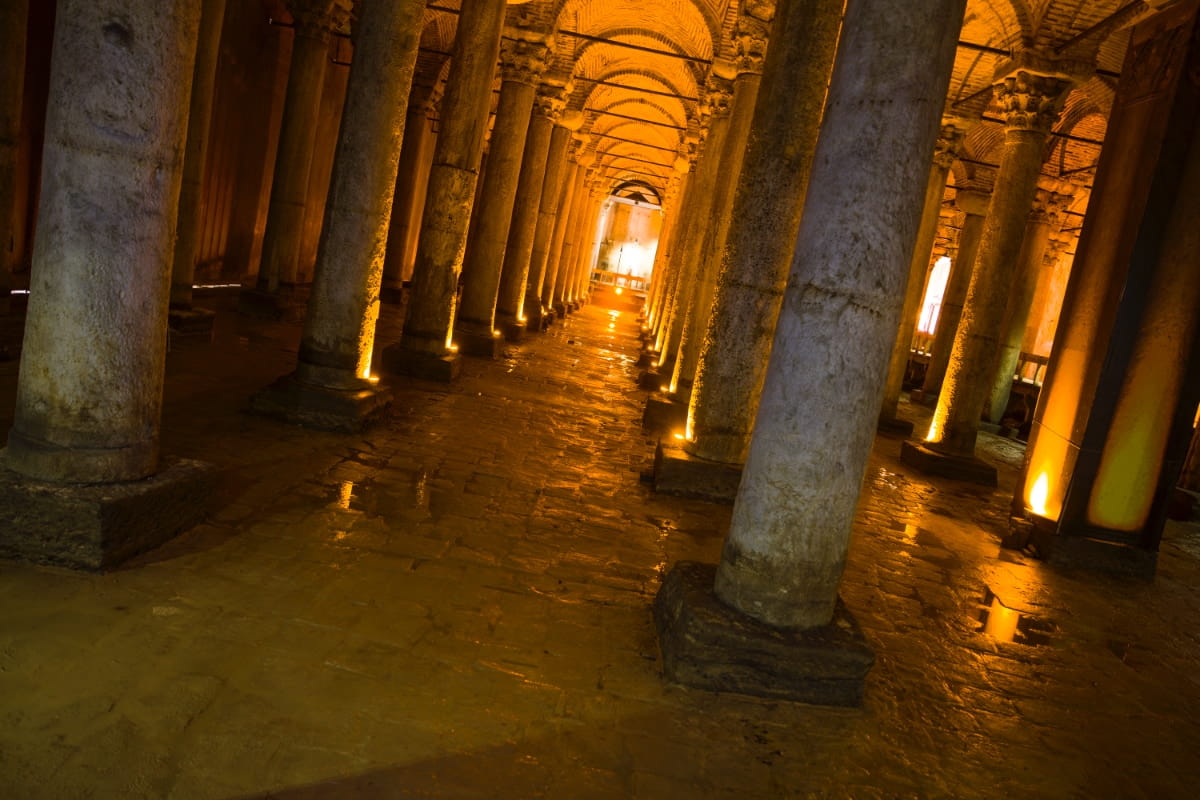
When you walk through the bustling streets of Sultanahmet today, surrounded by the calls of street vendors and the grandeur of the Hagia Sophia, it is easy to forget that a silent, watery world lies just beneath your feet. Istanbul, a city spanning two continents, has always faced a unique challenge: despite being surrounded by the sea, fresh water has historically been a scarce commodity. The solution to this geographical paradox was not just a matter of digging wells but involved creating one of the most sophisticated hydraulic systems the ancient world had ever seen. The Basilica Cistern, or Yerebatan Sarnıcı as it is locally known, is far more than a hauntingly beautiful tourist attraction; it is a testament to the foresight of Byzantine engineering and the absolute necessity of water security for a growing empire.
A Masterpiece of Byzantine Engineering
Constructed in the 6th century under the reign of Emperor Justinian I, the Basilica Cistern was born out of necessity following the Nika Riots. While visitors are often captivated by the atmospheric lighting and the carp swimming in the shallow waters, the true marvel lies in the structural ingenuity that has allowed this subterranean cathedral to survive for nearly 1,500 years. The architects of the time, likely Anthemius of Tralles and Isidore of Miletus, faced the monumental task of creating a reservoir capable of holding enough water to service the Great Palace and the surrounding elite districts while ensuring the structure could withstand the weight of the city above and the tremors of earthquakes.
The Architectural Marvel: Columns and Materials
The construction process itself was a feat of logistics and resource management that rivals modern infrastructure projects. The roof is supported by 336 marble columns, each standing 9 meters high, arranged in 12 rows of 28 columns each. What makes this engineering even more fascinating is the use of 'spolia'—recycled materials from ruined temples across the empire. This was an early form of sustainable construction, reducing the need to quarry new stone while embedding the history of the wider Roman world into the very foundations of the capital. The walls, made of firebrick and coated with a special waterproof mortar known as Khorasan mortar, were designed to prevent leakage and contamination, ensuring the water remained potable for the city's residents.
The Lifeline of Constantinople: Supply and Survival
To understand the cistern’s role, one must look beyond its walls to the vast network that fed it. The Basilica Cistern was the terminus of a massive water distribution system that stretched for hundreds of kilometers into the Belgrade Forest and beyond. It was not a standalone tank but the heart of a complex circulatory system. The water was transported via the Valens Aqueduct and a series of smaller channels, relying on gravity and precise calculations of gradient to ensure a steady flow into the city center. This network was vital for the sustainability of Constantinople, allowing the population to swell beyond what local resources could support.
Strategic Importance: Surviving Sieges and Droughts
The strategic importance of the cistern cannot be overstated, particularly during times of conflict. Constantinople was one of the most besieged cities in history, facing threats from Persians, Avars, Arabs, and eventually the Ottomans. During these long sieges, enemies would often cut the aqueducts leading into the city in an attempt to thirst the defenders into submission. The Basilica Cistern acted as a colossal strategic reserve, a 'water battery' that could sustain the city for weeks or even months when external supplies were severed. Without this internal reservoir, the impregnable Theodosian Walls would have meant little; the city would have fallen from within due to dehydration.
A Closer Look: Capacity and Dimensions
The capacity of the cistern is staggering even by modern standards. To visualize the sheer scale of this underground reservoir, consider the following technical specifications that highlight its storage potential:
| Feature | Measurement / Detail |
| Total Area | Approximately 9,800 square meters |
| Water Capacity | Estimated 80,000 - 100,000 tons |
| Dimensions | 140 meters long x 70 meters wide |
| Column Count | 336 columns |
| Wall Thickness | 4.80 meters (brickwall) |
Sustainability and Filtration Innovation
The Byzantines were keenly aware of the dangers of stagnant water and the need for filtration. The Basilica Cistern was not merely a stagnant pool; it incorporated design elements to maintain water quality. The sheer depth of the cistern allowed for sedimentation, where heavier particles and impurities would settle at the bottom, leaving clearer water at the top to be drawn up through shafts. This passive filtration system was crucial in an era before chemical purification, preventing the spread of waterborne diseases in a densely populated metropolis.
Maintaining Water Quality: Aeration and Overflow
Furthermore, the management of the water flow contributed to the city's overall environmental balance. The system included:
- Aeration Channels: The movement of water through the aqueducts before reaching the cistern helped oxygenate the supply.
- Overflow Mechanisms: Systems were in place to divert excess water to other parts of the city or into the sea to prevent structural damage during heavy rains.
- Seasonal Regulation: The cistern balanced the seasonal discrepancies in rainfall, storing winter rains for the dry, hot summers of the Mediterranean climate.
From Byzantine Necessity to Ottoman Curiosity
Following the Ottoman conquest of Constantinople in 1453, the role of the Basilica Cistern shifted. The Ottomans, culturally and religiously, preferred running water (cesme) over standing water for drinking and ritual ablutions. Consequently, the massive underground lake lost its primary function as a drinking water reservoir for the palace. For a time, it fell into obscurity, famously "rediscovered" by the scholar Petrus Gyllius in the 16th century when he noticed locals hauling up buckets of water—and sometimes fish—through holes in their floorboards. This transition marks a fascinating evolution in urban water management, where the infrastructure of the past was repurposed or simply lived atop of, weaving a new layer into the city's history.
Rediscovery and Repurposing
Today, as we step into 2026, the Basilica Cistern stands not just as a museum but as a reminder of the critical importance of urban water management. Recent restorations have reinforced the structure against earthquakes, ensuring that this legacy endures. While it no longer supplies the faucets of Istanbul, its existence prompts us to reflect on how ancient civilizations tackled the same sustainability issues we face today: resource scarcity, disaster preparedness, and the integration of infrastructure with the natural environment. Walking along the raised platforms, gazing at the Medusa heads repurposed as column bases, we are witnessing the intersection of art, engineering, and survival.
A Timeless Lesson in Urban Planning
The Basilica Cistern is a powerful symbol of resilience. It teaches us that the sustainability of a city depends on what lies beneath the surface as much as what is visible above. The Byzantines understood that a city's greatness is limited by its ability to provide for its people's most basic needs. As modern Istanbul continues to grow and evolve, the silent, stoic columns of the Yerebatan Sarnıcı remain, holding up not just the earth above them, but the weight of history and the memory of a city that learned to master the water.