Engineering Marvels of Justinian: The Construction Techniques of the Sunken Palace
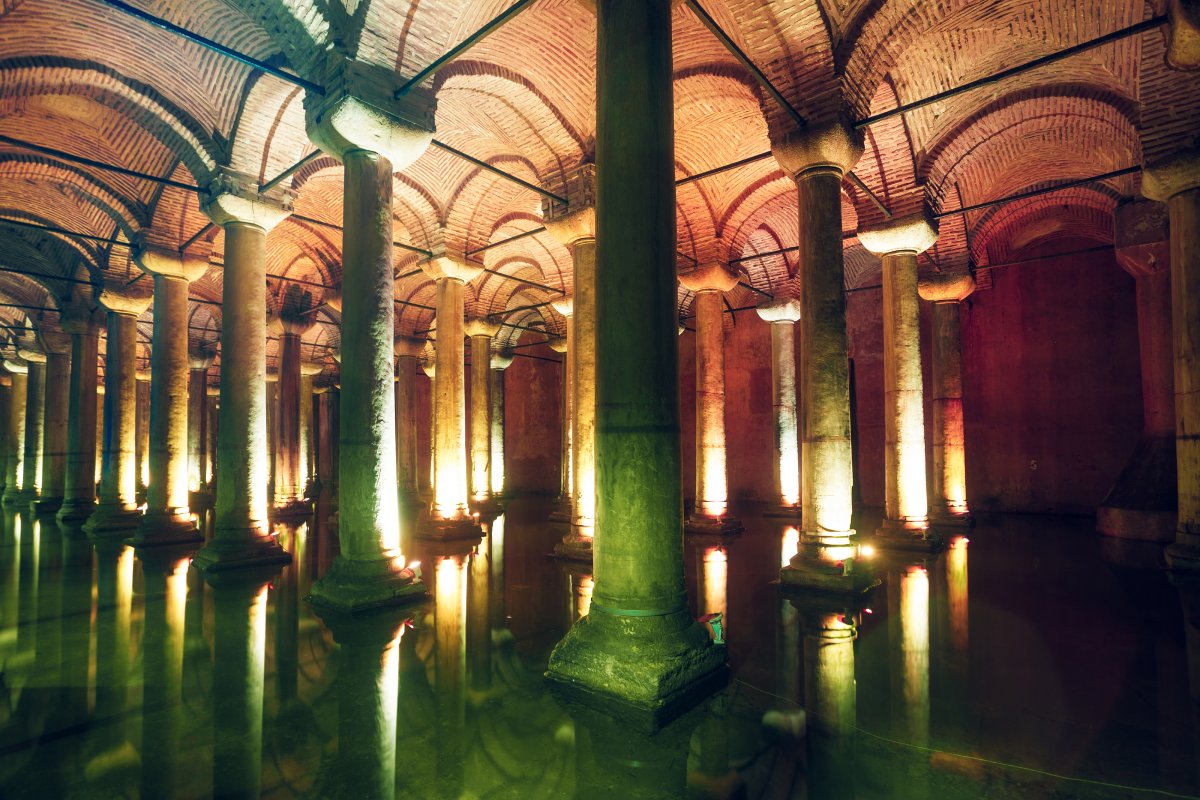
Stepping off the bustling, sun-drenched streets of Sultanahmet and descending into the cool, dimly lit cavern of the Basilica Cistern feels less like a simple tour and more like a journey into the belly of history. As your eyes adjust to the soft, amber lighting reflecting off the water, the sheer scale of the structure takes your breath away. It is easy to get lost in the romance of the Medusa heads or the atmospheric walkways, but the true magic here isn't just aesthetic; it is a triumph of mathematics, physics, and sheer architectural audacity. Standing here in December 2025, nearly 1,500 years after its completion, we are witnessing a structure that has outlived empires, survived massive earthquakes, and continues to baffle modern engineers with its resilience. To truly appreciate the "Sunken Palace," we have to look past the shadows and examine the brilliant engineering mind of Emperor Justinian’s architects.
The Necessity of Speed: Justinian’s ambitious Timeline
The 6th century was a tumultuous time for Constantinople. Following the Nika Riots of 532 AD, which left much of the city in ashes, Emperor Justinian I embarked on one of the most aggressive reconstruction projects in history. The Basilica Cistern wasn't just a vanity project; it was a critical infrastructure requirement for the city's survival, designed to hold nearly 80,000 cubic meters of water. What makes this feat astonishing is the timeline. While modern infrastructure projects often drag on for decades, historical records suggest the Cistern was completed in a remarkably short period, utilizing the labor of thousands of slaves and the expertise of the era's finest mathematicians, Anthemius of Tralles and Isidore of Miletus, the same minds behind the Hagia Sophia.
To achieve this speed without sacrificing structural integrity, the Byzantines employed a method of standardization that was centuries ahead of its time. Rather than quarrying new stone for every element, they utilized spolia repurposed materials from ruined temples and structures across the empire. This is why the columns do not match; some are Corinthian, others Ionic, and a few are Doric. This wasn't laziness; it was a calculated engineering decision to prioritize function and speed over uniform aesthetics, creating a modular grid system that allowed for rapid assembly.
The Secret Formula: Byzantine Hydraulic Mortar
If you look closely at the walls of the cistern, past the moss and the moisture, you will notice the binding material isn't typical gray cement. The true hero of the Basilica Cistern’s longevity is the specialized hydraulic mortar, often referred to as Khorasan mortar. Unlike standard lime mortar which dissolves or weakens under constant exposure to water, this mixture was chemically engineered to thrive in damp conditions. The secret ingredient was crushed brick and tile, rich in silica and alumina, mixed with lime.
This combination created a pozzolanic reaction, resulting in a binder that is effectively waterproof and incredibly durable. The walls are not just stone; they are a composite material. The engineers constructed the walls roughly 4 meters thick, employing a sandwich technique of baked bricks and hydraulic mortar. This composition provided two critical benefits:
- Impermeability: The mortar sealed the bricks so tightly that the cistern remained watertight for over a millennium, preventing leakage that would erode the foundations of the buildings above.
- Flexibility: The crushed brick aggregate allowed the mortar to flex slightly without cracking, a property essential for surviving the tectonic activity of the region.
Load-Bearing Mastery: The Column Grid
The visual rhythm of the 336 marble columns is mesmerizing, but their arrangement is a masterclass in load distribution. Arranged in 12 rows of 28 columns each, they are spaced exactly 4.8 meters apart. This specific spacing was not arbitrary. It was calculated to optimize the load-bearing capacity of the brick arches (vaults) that span between them. The roof of the cistern is essentially a flat floor for the structures above, meaning it had to support immense static weight plus the dynamic load of a bustling city square.
The engineers utilized cross-vaulted arches made of light, fired bricks. These arches transfer the weight of the ceiling down into the columns and eventually into the floor foundation. The use of lighter bricks for the ceiling vaults, rather than heavy stone, reduced the total dead load on the columns significantly. This delicate balance of weight distribution is why the structure feels airy rather than oppressive, despite being underground.
Earthquake Resistance Strategies
Istanbul sits near the North Anatolian Fault, a geological reality that the Byzantines were painfully aware of. The survival of the Basilica Cistern through centuries of tremors is not luck; it is design. The structure operates on principles of seismic isolation and redundancy. Because the columns are not a single monolithic wall, they allow the energy of an earthquake to dissipate through the swaying of the individual elements rather than snapping a rigid structure.
Furthermore, the water itself played a role. When the cistern was full, the mass of the water acted as a dampener against vibrations. However, the primary defense was the construction of the walls and the floor. The table below highlights the specific structural choices made to combat seismic forces:
| Structural Element | Byzantine Technique | Seismic Function |
| The Walls | Alternating bands of brick and stone | Absorbs shock waves; prevents cracks from traveling vertically through the entire wall. |
| The Floor | Multi-layered waterproof screed | Prevents liquefaction of the soil beneath the columns during tremors. |
| The Columns | Iron and lead dowels between segments | Provides flexibility while keeping column drums aligned during lateral movement. |
Hydraulic Engineering: Circulation and Filtration
Beyond the structural shell, the Basilica Cistern was a functional machine. It wasn't enough to just store water; the water had to remain potable. The engineers designed a slight gradient in the floor, almost imperceptible to the naked eye, which directed sediment and debris toward a central depression for easier cleaning. This shows a foresight for maintenance that is often overlooked in ancient structures.
The water, supplied by the Valens Aqueduct from the Belgrade Forest nearly 20 kilometers away, entered the cistern through a system of pipes that helped aerate the flow. The massive volume of the cistern also allowed for natural sedimentation, where heavy particles would sink to the bottom, ensuring that the water drawn from the top layers was relatively clear. It was a massive, gravity-fed filtration system that kept the Imperial Palace hydrated during the longest of sieges.
A Legacy Carved in Stone and Water
Walking through the cistern today, with the sound of dripping water echoing off the vaults, you realize that Justinian’s engineers didn't just build a tank; they built a cathedral to water. They understood material science, load dynamics, and geology in ways that rival modern capabilities. The Basilica Cistern is a testament to the ingenuity of the human spirit, proving that with the right calculations and a lot of determination, we can build things that last forever.