From Ancient Waters to Modern Marvels: The Engineering Behind the Basilica Cistern
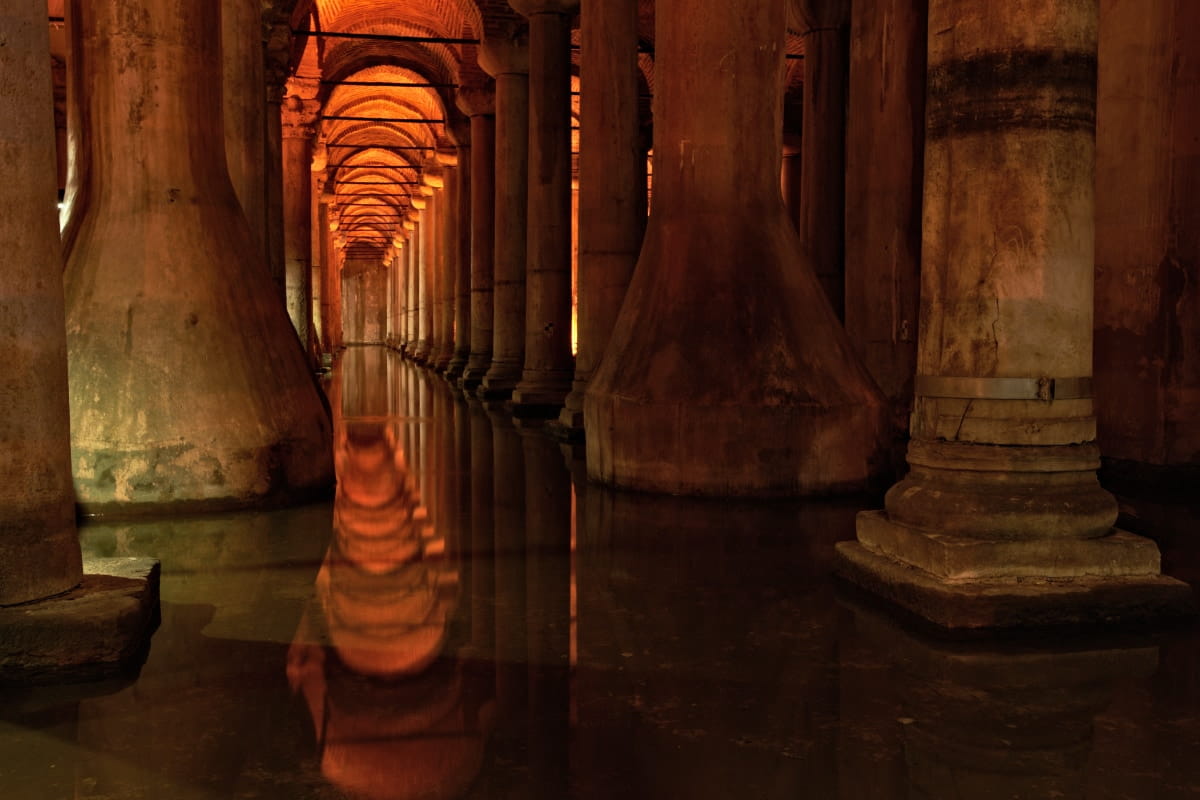
When you descend the fifty-two stone steps into the cool, dimly lit cavern of the Basilica Cistern, the bustling sounds of modern Istanbul fade into a heavy, respectful silence. The air feels different here—damp, ancient, and filled with the echo of dripping water that has persisted for nearly 1,500 years. It is easy to be captivated solely by the atmospheric beauty of the 'Sunken Palace' (Yerebatan Sarnıcı), with its endless rows of columns rising from the water like a petrified forest. But have you ever wondered what engineering marvels lie beneath this enchanting facade? Looking beyond the aesthetic allure reveals a story of unparalleled engineering genius. Standing here in January 2026, we are witnessing not just a historical monument, but a surviving testament to the sophisticated capabilities of Byzantine architects who conquered the challenges of load-bearing structures and hydraulic pressure long before modern machinery existed.

A view of the Basilica Cistern's interior, showcasing the iconic columns. (Image: Example Image)
The Vision of Emperor Justinian I: Crisis and Construction
The construction of the Basilica Cistern was born out of necessity and crisis following the Nika Riots of 532 AD, which had devastated much of the city. Emperor Justinian I envisioned a reservoir that would not only serve the Great Palace but also secure the city’s water supply against sieges and droughts. The engineering challenge was immense: creating a subterranean structure capable of holding approximately 80,000 cubic meters (roughly 100,000 tons) of water while supporting the weight of the urban landscape above. Historical accounts suggest that over 7,000 slaves were employed in this monumental effort, working tirelessly to excavate the earth and lay the foundations of what would become the largest ancient cistern in Istanbul.
The location was chosen strategically beneath the Stoa Basilica, a large public square on the First Hill of Constantinople. This placement allowed for gravity-fed water distribution to the imperial buildings. The architects had to calculate the precise depth required to maintain water flow while ensuring the structural integrity of the massive roof. It was a high-stakes project where a single calculation error in the load-bearing capacity could have led to a catastrophic collapse, swallowing a portion of the city center.
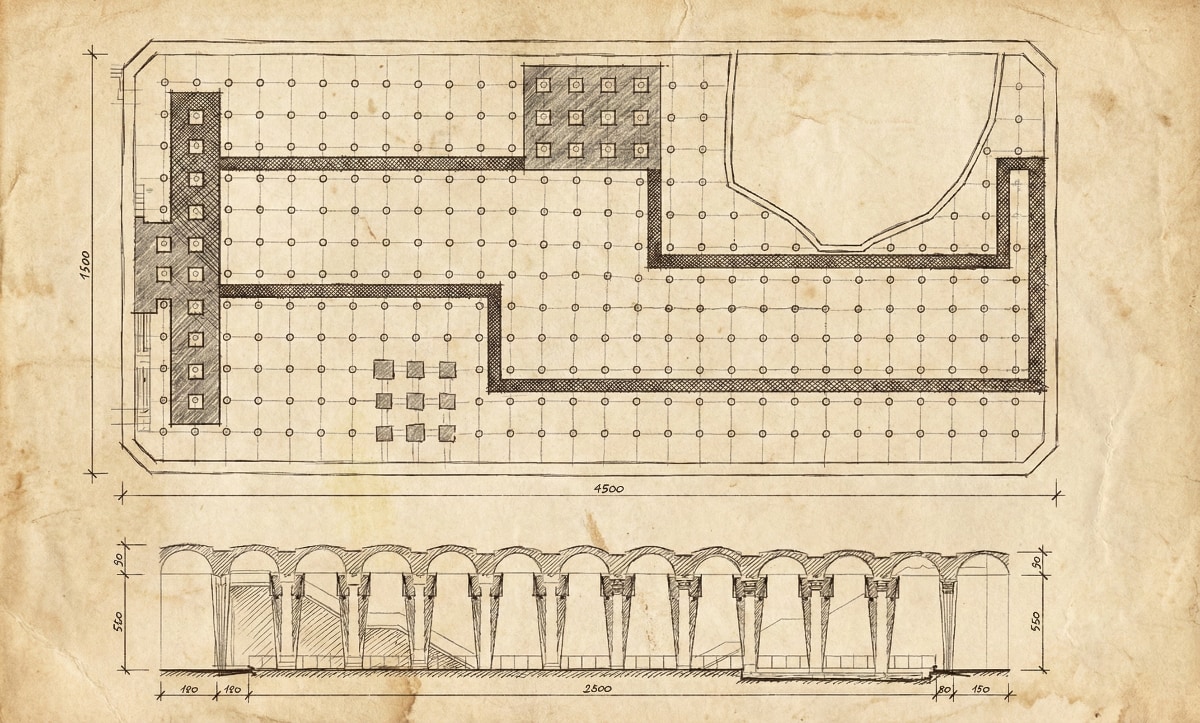
A map illustrating the strategic location of the Basilica Cistern beneath the Stoa Basilica. (Image: Example Map)
Architectural Ingenuity: The Forest of Columns
The most striking feature of the cistern is undoubtedly its grid of 336 marble columns, arranged in 12 rows of 28 columns each. Each column stands 9 meters tall, spaced 4.8 meters apart, creating a perfect rhythmic symmetry that distributes the immense weight of the brick vaults above. What makes this engineering feat even more fascinating is the use of 'spolia'—recycled materials from ruined temples and structures across the Roman Empire. This was not merely an aesthetic choice or a cost-saving measure; it was a logistical masterstroke. Quarrying and transporting hundreds of new columns would have taken decades; repurposing existing high-quality marble allowed the engineers to meet Justinian's urgent timeline.
The variety of column styles—mostly Ionic and Corinthian, with a few Doric—tells a story of pragmatic engineering. The architects were less concerned with stylistic uniformity and more focused on the structural height and stability. When a column was too short for the vaulted ceiling, they utilized distinct bases or plinths to achieve the necessary elevation. This adaptive reuse demonstrates a sophisticated understanding of modular construction, where disparate elements were unified into a cohesive, functional system.
Structural Statistics of the Cistern
To truly appreciate the scale of this underground marvel, one must look at the raw data that defines its existence. The following table breaks down the key engineering dimensions that have allowed the structure to survive centuries of earthquakes:
| Feature | Measurement / Detail |
| Total Area | Approximately 9,800 square meters |
| Wall Thickness | 4.8 meters (15.7 feet) |
| Water Capacity | ~80,000 cubic meters |
| Roof Construction | Brick cross-vaults supported by arches |
Ancient Materials and Waterproofing Techniques
One of the most critical engineering challenges for any cistern is preventing leakage. The Byzantine engineers utilized a specific construction technique to ensure the reservoir remained watertight for centuries. The walls, measuring a staggering 4.8 meters in thickness, were constructed using fire-hardened bricks bonded with a special hydraulic mortar. This was not ordinary mud or clay; it was a scientifically advanced mixture known as 'Khorasan mortar' (or Roman concrete equivalent), composed of crushed brick, lime, and volcanic ash. This composition possesses pozzolanic properties, meaning it hardens when exposed to water and becomes incredibly durable over time.
The floor of the cistern received equal attention to detail. It was paved with layers of brick and coated with a thick layer of the same waterproof plaster. The corners where the walls met the floor were curved (chamfered) rather than angled at 90 degrees. This is a subtle but brilliant engineering detail: curved corners reduce stress concentrations from water pressure, minimizing the risk of cracks developing at the joints. These techniques highlight a deep understanding of fluid dynamics and material science that rivals modern construction standards.
The Hydraulic System: Connecting to the Aqueducts
The Basilica Cistern was not an isolated pool; it was the terminus of a vast, complex hydraulic network. Water was transported from the Belgrade Forest, located 19 kilometers away near the Black Sea, through the Valens Aqueduct (Bozdoğan Kemeri) and the Mağlova Aqueduct. The engineering required to maintain a consistent gradient over such a distance is mind-boggling. The water had to flow by gravity alone—too steep, and the rushing water would damage the channels; too flat, and the flow would stagnate.
- Gradient Control: Engineers maintained a precise slope of about 1 meter per kilometer to ensure steady flow.
- Sedimentation Tanks: Before entering the main cistern, water passed through settling basins where debris and dirt would sink to the bottom, acting as a primitive but effective filtration system.
- Distribution Channels: Outflow pipes were positioned at various heights to allow water to be drawn even when levels were low, ensuring a reliable supply during dry seasons.
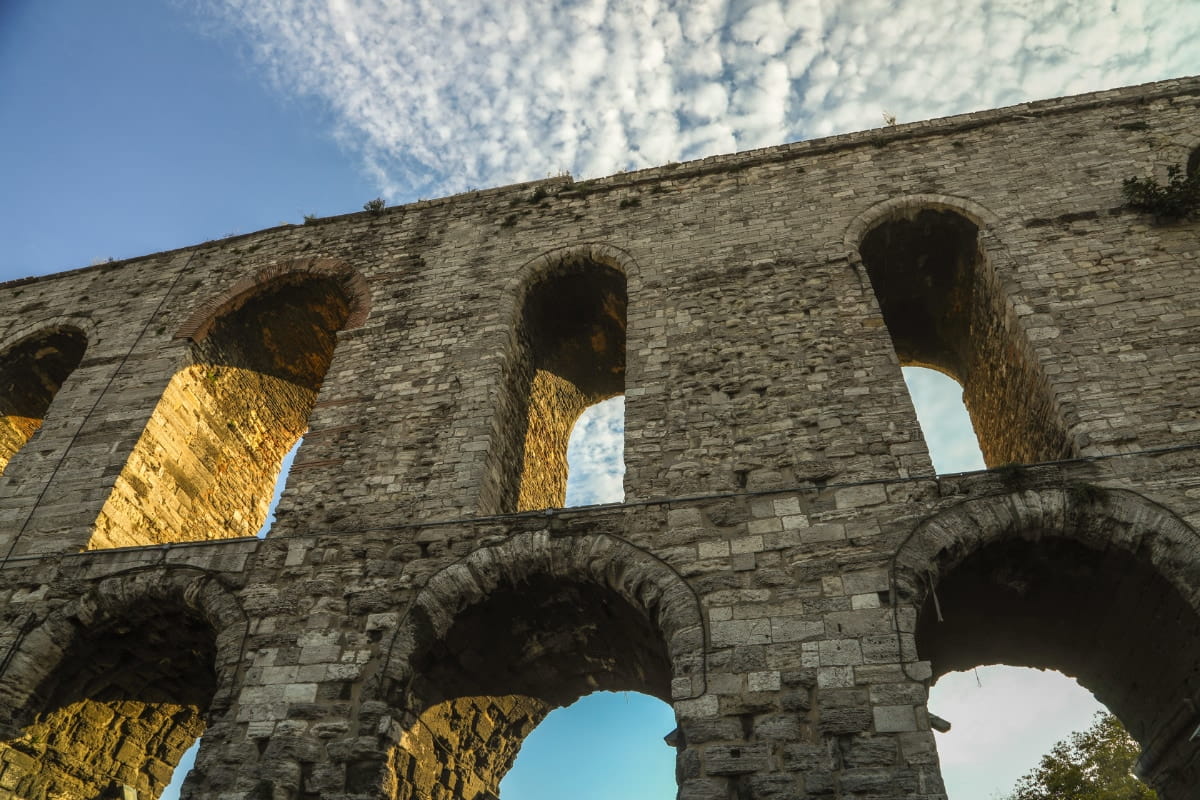
The Valens Aqueduct, a crucial part of the Basilica Cistern's water supply. (Image: Example Aqueduct)
The Mystery and Engineering of the Medusa Heads
In the northwest corner of the cistern, two columns rest on massive blocks carved with the visage of Medusa—one positioned upside down, the other sideways. While local legends and tour guides often focus on the mythological aspect—that they were placed this way to negate the Gorgon's deadly gaze—the engineering reality is far more practical. These blocks are prime examples of spolia used as structural shims. The columns intended for this section were likely slightly shorter than the others, or the floor level was uneven.
Byzantine engineers needed base blocks of a specific size to bridge the gap and reach the vaulted ceiling. The Medusa heads, likely taken from a dismantled Roman building like the Temple of Apollo in Didyma, were simply the right dimensions for the job. Placing them sideways or upside down was necessary to create a flat surface for the column base to rest upon. This pragmatic approach signifies that for the builders of the Basilica Cistern, structural stability took precedence over artistic preservation or superstitious beliefs.
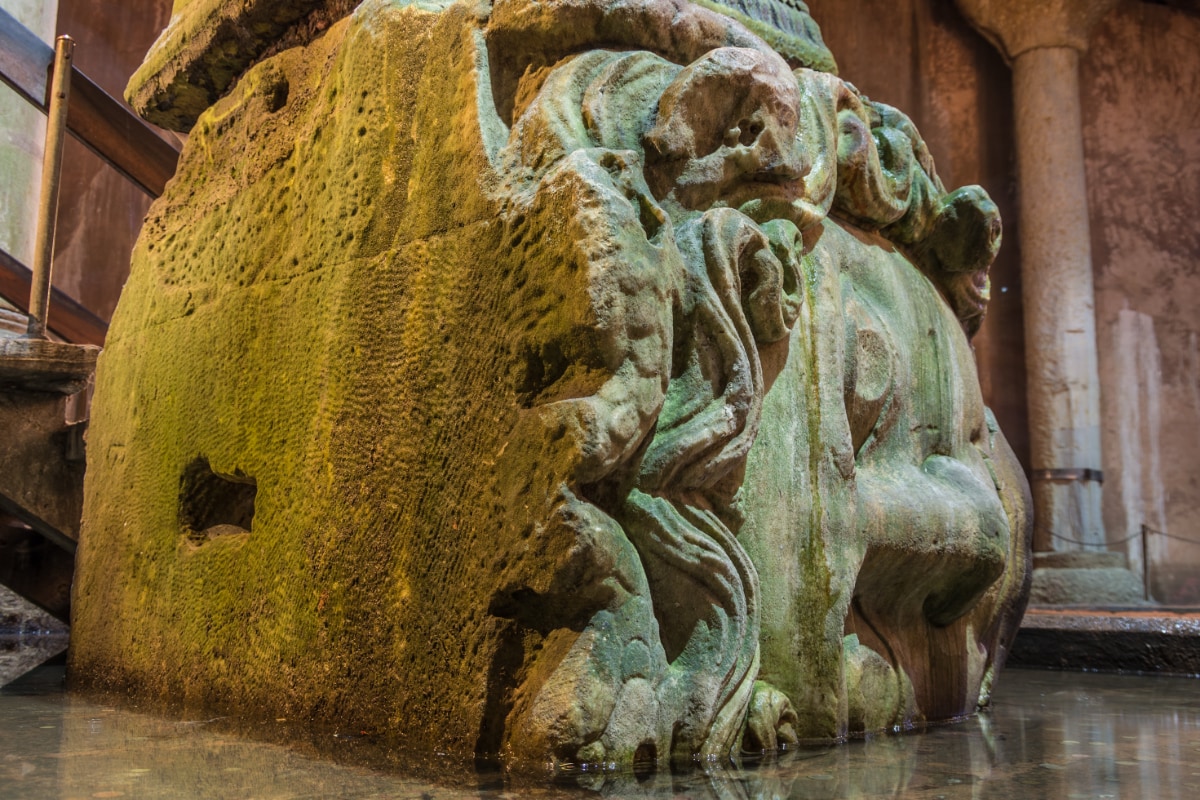
One of the Medusa heads used as a column base in the Basilica Cistern. (Image: Example Medusa)
Enduring Through the Ages
The fact that we can walk through these aisles today is a miracle of resilience. Istanbul sits on a major fault line, and the city has been rocked by severe earthquakes countless times over the last 1500 years. The flexibility of the brick cross-vaults and the robust nature of the columns allowed the structure to absorb seismic waves without collapsing. The mortar used between the bricks has a certain elasticity, allowing for minute movements that rigid concrete would not tolerate.
Recent restorations have further highlighted the brilliance of the original design. Modern engineers have had to reinforce the structure using steel tension rods, but the core skeleton remains purely Byzantine. As you exit the cistern and return to the bright daylight of the city, you carry with you a profound respect for the ancient minds that conceived this space. The Basilica Cistern is more than a tourist attraction; it is a masterclass in civil engineering, proving that with ingenuity and the right materials, humanity can build legacies that withstand the test of time.
What other ancient engineering marvels inspire you? Share your thoughts in the comments below!