Spolia of the Empire: The Secret Origins of the 336 Columns
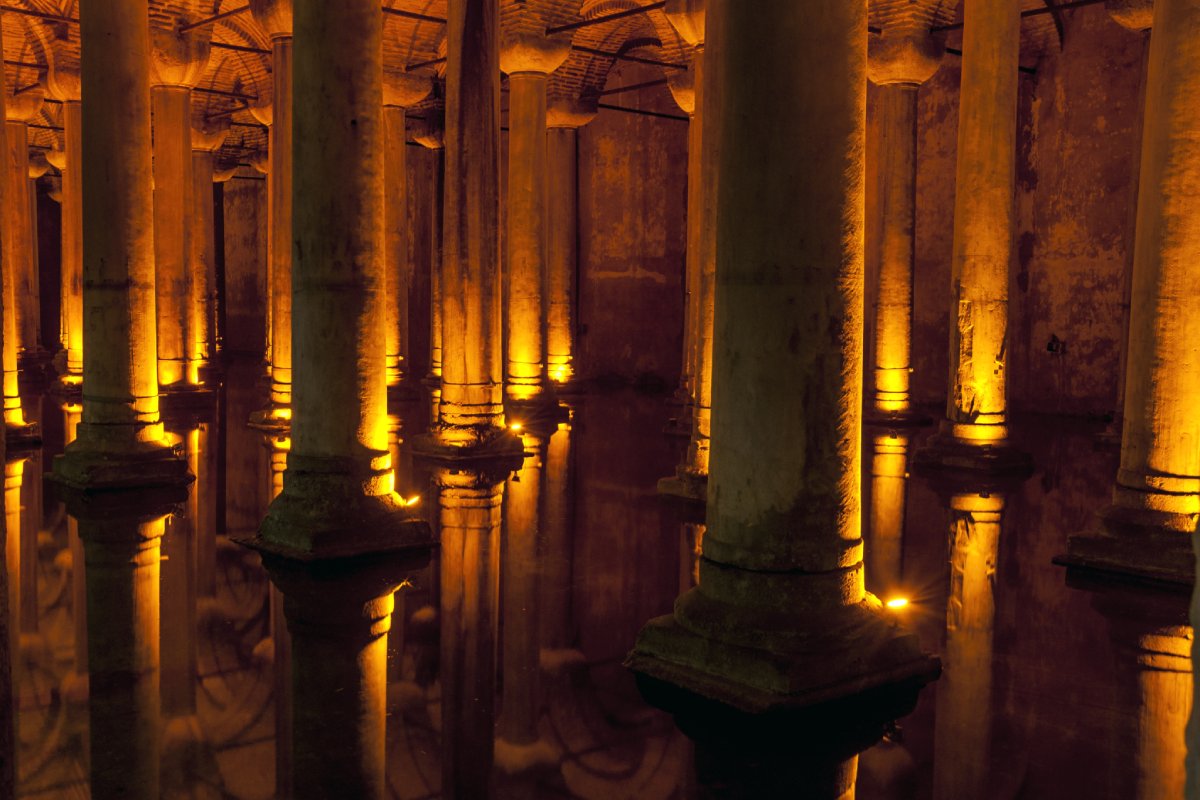
When you descend the fifty-two stone steps into the cool, damp embrace of the Basilica Cistern, the first thing that strikes you is the silence. It is a heavy, watery silence, broken only by the rhythmic dripping of water and the soft whispers of awe-struck travelers. But as your eyes adjust to the dim, amber lighting, the true marvel of this underground palace reveals itself: a seemingly infinite forest of marble rising from the water. To the untrained eye, these 336 columns might appear as a uniform support system for the massive brick roof above. However, look closer, and you will see that this is not a monument of uniformity, but a patchwork quilt of the Roman Empire’s history.
This architectural wonder, known locally as Yerebatan Sarnıcı (The Sunken Cistern), is more than just a water reservoir; it is a museum of recycled history. The columns that hold up this subterranean world do not match. Some are smooth, others fluted; some are made of white marble, others of speckled granite. This lack of symmetry is not a mistake but a deliberate and fascinating practice known as spolia. It tells the story of an empire in transition, where the ruins of the past were literally repurposed to build the future.
The Art of Spolia: Recycling the Empire
In the 6th century, when Emperor Justinian I commissioned the reconstruction of this cistern, Constantinople was the center of the world. However, the city had just survived the devastating Nika Riots, which had reduced much of it to ash. There was an urgent need to rebuild, and to do so quickly. This urgency gave birth to one of the most intriguing aspects of Byzantine architecture: the extensive use of spolia.
Spolia refers to the practice of taking building elements such as columns, capitals, and friezes from older, often ruined structures and reusing them in new construction. For the Basilica Cistern, this meant stripping materials from across the Roman Empire.
- Speed and Efficiency: Carving hundreds of new columns from scratch would have taken decades. By repurposing existing ones, the cistern was completed in record time.
- Symbol of Dominance: Using stones from pagan temples was a powerful statement. It symbolized the triumph of the new Christian capital over the old pagan world.
- Economic Necessity: Transporting existing marble from nearby ruins was far cheaper than quarrying and shipping new stone from distant lands.
A Forest of Marble: Analyzing the 336 Columns
Standing in the presence of these giants is a humbling experience. There are exactly 336 columns arranged in 12 rows of 28, each standing 9 meters tall. They are spaced 4.80 meters apart, creating a perfect grid that reflects beautifully on the still water. Yet, despite this geometric perfection, the columns themselves are a chaotic mix of styles and materials.
The majority of these columns were salvaged from ruined temples in various parts of the Byzantine Empire, particularly from Anatolia. Because they were not made for this specific structure, the builders had to use ingenious engineering tricks to make them fit. You might notice that the bases of the columns vary significantly. Some sit on high plinths, while others rest directly on the floor. This was done to ensure that the roof remained perfectly level, regardless of the differing lengths of the recycled columns.
The Clash of Styles: Corinthian vs. Doric
As you wander through the wooden walkways, pay attention to the capitals, the decorative tops of the columns. This is where the diversity of the spolia is most visible. The architectural styles span centuries and artistic movements, creating a unique blend that you won't find in a purpose-built structure.
Most of the capitals feature the Corinthian style, characterized by elaborate carvings of acanthus leaves. These were likely taken from grand temples or public buildings where aesthetics were paramount. However, interspersed among them are columns with Doric capitals. The Doric style is much simpler, plain, and sturdy. The presence of these simpler columns alongside the ornate Corinthian ones suggests that the builders used whatever they could get their hands on. It wasn't about matching styles; it was about structural integrity.
| Feature | Description | Origin Story |
| Corinthian Capitals | Ornate, leafy designs (98 columns). | Likely from high-status Roman temples dedicated to major deities. |
| Doric Capitals | Simple, rounded, unadorned. | Sourced from older, utilitarian structures or lesser shrines. |
| Column Shafts | Mix of granite and marble. | Transported from various quarries and ruins across Anatolia. |
Engineering Genius Meets Artistic Chaos
What makes the Basilica Cistern so captivating is the tension between the chaos of the materials and the order of the engineering. The walls are 4.80 meters thick, built of firebrick and plastered with a special mortar to make them waterproof. The roof is a masterpiece of cross-vaults. Yet, holding it all up is this ragtag army of mismatched columns.
There is a specific column you must look for, known as the "Crying Column" or the "Peacock’s Eye." Unlike the others, this column is engraved with teardrop shapes and remains perpetually wet. While science explains this via the porous nature of the specific marble used, legend says the column weeps for the hundreds of slaves who died (according to a legend) during the cistern's construction. It is a poignant reminder of the human cost behind these grand imperial projects.
Visiting the Sunken Palace Today
As we approach the end of 2025, the Basilica Cistern remains one of Istanbul's most visited sites, and for good reason. The recent restorations have added a modern artistic flair to the ancient structure, with occasional light shows and art installations that utilize the darkness and the water reflections. However, the true soul of the place lies in the stone.
When you visit, take your time. Don't just rush to the Medusa heads. Stop in the middle of the walkway. Look at how a green granite column stands next to a white marble one. Notice how the light plays off the different textures. You are looking at stones that were quarried perhaps two thousand years ago, shaped by Roman hands, toppled by time or war, and then raised again by Byzantine engineers to serve a city that is still thriving today.
The 336 columns of the Basilica Cistern are not just supports for a roof; they are the silent witnesses of history. They remind us that nothing is truly lost, only transformed. In the cool, dripping darkness of the cistern, the Roman Empire doesn't feel dead, it feels like it has simply changed shape, resting quietly beneath the bustling streets of Istanbul.